
Core Matching Mechanics
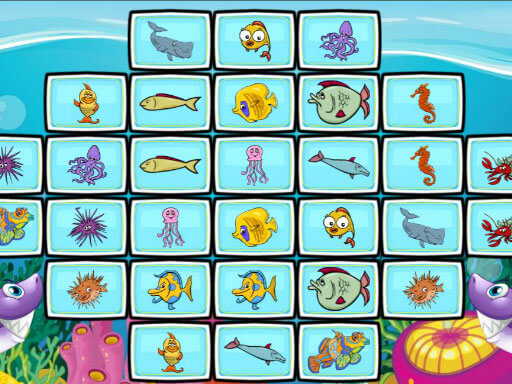
Players face a grid of fish-themed tiles, each featuring a distinct marine creature. The objective is to clear the entire board by selecting and removing pairs of identical tiles. A key rule governs which tiles are eligible: only those with at least two adjacent sides free from neighboring tiles can be chosen. This constraint transforms what might be a simple memory exercise into a spatial reasoning puzzle. Each move requires evaluating the board layout and predicting how removals will open new possibilities.
Strategic Depth in Tile Selection
The open-side requirement introduces a layer of planning not found in traditional matching games. Early moves often focus on tiles near the edges or those with fewer neighbors, as they are easier to access. However, experienced players learn to prioritize central tiles that, once removed, can unlock multiple new matches. The challenge lies in balancing immediate gains against long-term board accessibility. A poorly chosen pair might leave isolated tiles that cannot be matched later, forcing a restart.
Visual and Audio Atmosphere
The underwater setting is brought to life through vibrant tile designs depicting various fish, each with distinct colors and patterns. The background features gentle ocean currents and soft lighting, creating a serene environment. Sound effects include subtle water sounds and a calm musical score that adapts to the player's pace. This audiovisual design supports focused play without causing distraction, making it suitable for both short sessions and extended puzzle solving.
Accessibility and Assistance Features
The game is designed to welcome players of all ages and skill levels. An optional hint system highlights a valid pair when the player feels stuck, preventing frustration without removing the core challenge. The interface uses clear icons and responsive touch or click controls, ensuring smooth interaction on various devices. No time limits or pressure mechanics exist, allowing players to think through each move at their own speed.
Progression and Replay Value
While the fundamental rules remain consistent, each board layout is procedurally generated, ensuring no two puzzles are identical. This randomness encourages repeated play, as players must adapt their strategy to each new arrangement. The scoring system rewards efficiency, with higher points for clearing tiles in fewer moves or without using hints. This provides a gentle incentive to improve without creating competitive pressure, keeping the experience relaxed yet engaging.






Comments
0 comments