
Core Puzzle Mechanics
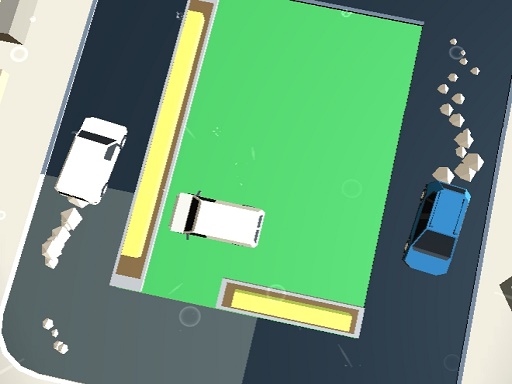
Parking Lot Puzzle Challenge turns a routine activity into a thoughtful puzzle. Each stage presents a grid-like lot filled with colorful vehicles that must be moved to their assigned spots. Players swipe to slide cars forward or backward along straight paths, avoiding other vehicles and barriers. The challenge lies in sequencing moves correctly—one wrong slide can block progress, forcing a restart. This design encourages players to visualize the entire path before making a move, blending spatial reasoning with a touch of patience.
Level Design and Difficulty Curve
The game begins with simple layouts featuring only a couple of cars and ample space. Early stages serve as a gentle introduction, allowing players to learn the controls and basic strategies. As players advance, lots become more crowded, introducing tighter corners and multiple cars that must be coordinated. Later levels may include obstacles like cones or dividers that further restrict movement. This gradual increase in complexity ensures that newcomers feel capable while veterans find plenty of mental stimulation.
Visual Style and User Interface
The game adopts a clean, colorful 2D art style that is easy on the eyes. Each car is painted in a distinct, vibrant hue, making them easy to identify and track on screen. The parking spots are clearly marked with visual cues, such as colored outlines or arrows, guiding players toward the correct orientation. The interface is minimal, with only essential buttons for restarting levels or returning to the menu. This simplicity helps maintain focus on the puzzle itself.
Play Session Flexibility
Parking Lot Puzzle Challenge is designed to fit into short breaks or longer play sessions. Individual levels typically take only a few minutes to solve, making them ideal for quick mental exercise during a commute or waiting in line. For those with more time, the game offers a progressive campaign that can be tackled in longer sittings. There is no time pressure or scoring system that penalizes slow play, allowing users to proceed at their own pace and enjoy the process.







Comments
0 comments