

Core Concept
Marble Route Builder is a spatial reasoning game where players adjust the environment to guide a small sphere into a waiting receptacle. The challenge lies in understanding how the ball interacts with each surface. It rolls along flat sections, drops off edges, and changes direction upon impact with angled barriers. Success requires visualizing the entire path before making the first adjustment.
Level Design Philosophy
Each stage presents a unique configuration of movable parts. Early levels introduce basic concepts like simple slopes and straight corridors. Later stages combine multiple elements, requiring players to consider the order of operations. A platform moved early might block a later path, so thinking several steps ahead becomes essential. The difficulty curve is gentle, allowing newcomers to build confidence while offering enough complexity to engage experienced puzzle fans.
Interaction and Feedback
Players interact directly with the game pieces using a mouse or touch screen. Clicking or tapping a component allows it to be repositioned or rotated. The game provides immediate visual feedback, showing the ball's trajectory after each change. This trial-and-error approach encourages experimentation. If the ball fails to reach the target, the player can quickly undo the last move and try a different arrangement. The system rewards patience and creative thinking over speed.
Visual Style and Atmosphere
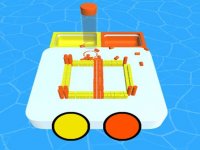
The graphics are clean and minimal, with a soft color palette that reduces eye strain during extended play sessions. Each element is clearly distinguishable, making it easy to identify which parts are movable and which are fixed. The gentle rolling sound of the marble adds a soothing auditory element. The overall presentation supports the game's relaxed pace, creating an environment where players can focus without distraction.
Progression and Replayability
As players complete levels, new stages become available, introducing fresh mechanics and more intricate layouts. The game does not rely on a scoring system or leaderboards, which keeps the focus on personal satisfaction. Players can revisit any completed level to attempt alternative solutions, as many stages have multiple valid arrangements. This non-linear approach encourages exploration and reinforces the core problem-solving skills.







Comments
0 comments