
Core Cooperative Mechanics
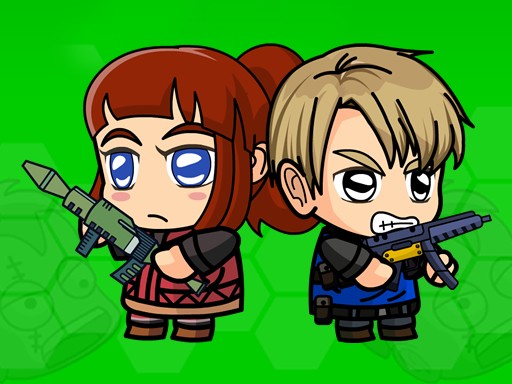
At its heart, this game is built around shared responsibility. Two players each control a character, working side by side to defend a central location. The creatures approach from multiple directions, forcing players to divide their attention and coordinate their movements. Success depends on covering each other's blind spots and responding to threats as a unit. The game does not feature single-player mode; it is designed exclusively for pairs, making communication a fundamental part of the experience.
Resource Management & Upgrades
Defeating creatures rewards players with an in-game currency. Between rounds, this currency can be spent on improvements to defensive equipment and personal gear. Players must decide whether to strengthen their own position or invest in shared defenses. The upgrade system is straightforward, with clear choices that affect how the next wave plays out. Saving currency for more expensive upgrades later in the game often proves more effective than spending it all immediately.
Wave Progression & Difficulty Curve
Each successive wave brings more creatures and introduces new types that behave differently. Early rounds serve as a tutorial, allowing players to learn the controls and basic strategies. As the game progresses, the pace intensifies, requiring faster reactions and more deliberate planning. The difficulty increases gradually, giving players time to adapt. A pause feature allows for mid-wave strategy discussions without the pressure of real-time action.
Accessible Controls & Family-Friendly Design
The controls are intentionally simple, with movement and aiming handled through intuitive inputs. This design choice ensures that players of all ages and experience levels can participate without frustration. The visual style avoids graphic content, focusing instead on clear indicators for creature positions, health, and upgrade status. The family-friendly approach extends to the game's theme, which emphasizes cooperation and problem-solving over conflict.
Replayability & Random Elements
Each playthrough may feel different due to random elements in creature spawn patterns and upgrade availability. This variability encourages experimentation with different strategies and upgrade paths. Players can track their progress over multiple sessions, aiming to survive longer or achieve higher scores. The cooperative nature of the game also means that playing with different partners can lead to new approaches and outcomes.







Comments
0 comments