Shade Shift Puzzle succeeds where many educational games fall short: it makes learning feel like play. The core mechanic of mixing primary colors to match keys is immediately understandable, yet the puzzles grow cleverly complex. The lack of timers or scores creates a relaxed atmosphere that encourages experimentation. Visuals are bright and clean, and the controls are responsive. This game is an excellent choice for parents seeking a constructive screen-time activity or for anyone who enjoys thoughtful, low-pressure puzzles. It demonstrates that educational content can be genuinely entertaining.
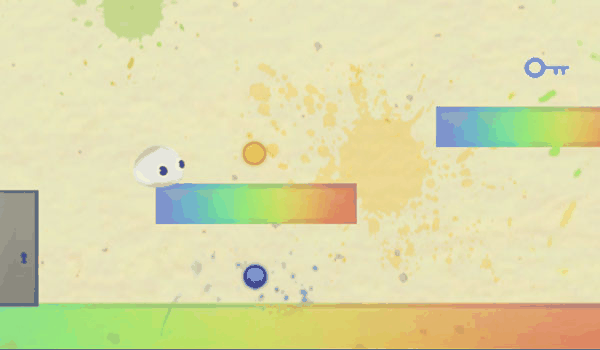
In Shade Shift Puzzle, the central activity involves adjusting your character's hue to match the color of a key. You start with red, blue, and yellow. By moving through different zones or using on-screen controls, you combine these primaries to create secondary colors like green, orange, and purple. The game rewards careful observation and logical thinking, as each key demands a precise shade. This system teaches fundamental color theory in a hands-on way, making abstract concepts tangible through direct interaction.
The game presents a series of stages, each with a unique layout and a set of colored keys to collect. Early levels focus on simple primary color matches, while later stages introduce combinations that require multiple mixing steps. For example, a level might require you to first create green to collect a key, then mix that green with yellow to reach a lime shade for another key. This progressive complexity keeps the gameplay engaging without overwhelming new players. The difficulty curve is gentle, allowing players to build confidence as they advance.
Shade Shift Puzzle uses bright, clear visuals that make color identification straightforward. Each key and door is vividly colored, and the character's current hue is displayed prominently. The interface is minimal, with simple touch or click controls for mixing colors. This design ensures that players of all ages can focus on the puzzle-solving aspect without distraction. The backgrounds are clean and pleasant, contributing to a relaxed atmosphere that suits the educational tone of the game.
The game encourages a trial-and-error approach. If you mix the wrong color, you can easily reset and try again. This freedom to experiment is key to the learning process. Players quickly discover that red and blue make purple, or that yellow and blue create green. Over time, they internalize these relationships, which can be applied to real-world art projects or further study. The game never penalizes mistakes harshly, fostering a positive environment for exploration.
Shade Shift Puzzle is designed for a broad audience. Young children can enjoy the simple color matching, while older players appreciate the logical challenges of multi-step mixing. The lack of time pressure or complex controls makes it accessible to casual gamers and those new to puzzle games. Parents can play alongside their children, discussing color theory and strategies. This shared experience adds a social dimension that enhances the game's value as a learning tool.






Player Comments
Sign in to comment
You must be logged in before posting a review or rating.
No account? Create one
No comments yet. Be the first to comment!